Who am I?

I'm from Houston, a graduate of the University of Texas, a fan of the Houston Astros and Houston Texans. But this blog will be about the "greater sports", whatever that means.

Follow me on Twitter: @lhd_on_sports

Labels

LHD_PotW (736) MLB (205) NFL (176) NCAA (138) NFL Playoffs (78) NBA (77) NHL (68)
Showing posts with label Carlos Beltran. Show all posts

Thursday, January 15, 2026

2026 National Baseball Hall of Fame Vote

In an LHD on Sports Blog tradition, I am once again conveying my thoughts on who I would vote for if I had a BBWAA ballot for the 2026 National Baseball Hall of Fame.

The BBWAA vote will be revealed on Major League Baseball (MLB) Network on Tuesday, January 20, 2026.  The Hall of Fame vote reveal remains one of the most anticipated moments on the baseball calendar and certainly of the offseason.  Here is the 2026 National Baseball Hall of Fame Candidates Eligible for vote (via Baseball Reference with prior year percentage total for returning candidates).  75% of all ballots cast must include the players name for induction.


Induction Ceremony 2025

As most readers probably know, the actual voting committee is the Baseball Writers' Association of America (BBWAA).  Prior to 2016, once a member, always a vote.  In 2016, several changes to the voting process were made (see my related Blog here) culling the list of voters to those who had covered the game in the prior 10 years.  This played out to remove a number of small vote ballots and increase percentages for those on the bubble.

There are a few overarching factors to cover before we get to the specifics.

1) A major, controversial specter over the Hall will continue to be how to handle candidates associated with Performance Enhancing Drug (PED) use in baseball primarily in the 1990s and early 2000s, an era for which many players accused are now on the Hall of Fame ballot although the number is dwindling with Alex Rodriguez, Andy Pettitte and Manny Ramirez running out of eligibility.  There are players whose on-field performance likely merits election, however because of their associated with substances that enhanced their performance, some members (a minority) of the BBWAA have been hesitant to cast votes their way.  At least in the 75% needed for induction.  Because the official voting rules include the words "integrity, sportsmanship, and character," their reluctance is justified in my mind.  For my selection, I will not presume guilt, but if there are legal findings, firsthand accounts (including Mitchell Report) or strong anecdotal evidence of PED use, I will strongly weigh against voting for the candidate.  You can count me in the "The PED STJ" type here in a blog I wrote.  A constant I hear is "how can it be a Hall of Fame without Bonds, Clemens, Pete Rose, etc."  Their accomplishments, records, videos, etc. are more than prominent in the museum portion of the Hall of Fame and museum, but down by the plaques, you won't find them there.  Did the crime, do the time.

2) A change in consideration for me is how to assess pitchers.  Whereas the 300-win plateau with a low ERA reflective of the dead ball, or pitcher dominated, eras prior to 1970 used to be a norm, it's become increasingly more difficult to get wins in the era of specialty relievers with starters leaving the game before the end of the sixth inning many times in close games.  Conversely, however, one would think this would benefit starting pitchers ERA by seldom going through a lineup more than twice in some cases, rarely more than three times.  Also, after many years of closers not being strongly considered, Mariano Rivera became the first and only to date unanimous inductee to the Hall, along with high save count Trevor Hoffman, Billy Wagner, and Lee Smith in recent years.  The doors have opened a bit in that regard.  In the end, for pitchers, I strongly weigh dominance over a reasonable period of time, along with Cy Young Awards, All-Star games, win titles, career saves, and ERA.

3) There is also first and last ballot bias.  First ballot candidates some BBWAA voters seem reticent to vote in to protect some sort of integrity of being a "first ballot hall of famer".  Evidence, three voters who did not include Ken Griffey Jr. in 2016 or the one guy who didn't vote for Ichiro Suzuki in 2025.  Likewise, when a player is on his last ballot (as Tim Raines was in 2017Edgar Martinez in 2019Larry Walker in 2020 and Billy Wagner in 2025) voters who previously withheld a vote tend to pay a bit more attention to their candidacy considering it's a final shot and vote favorably.

Tuesday, January 14, 2025

2025 National Baseball Hall of Fame Vote

In an LHD on Sports Blog tradition, I am once again conveying my thoughts on who I would vote for if I had a BBWAA ballot for the 2025 National Baseball Hall of Fame.

The BBWAA vote will be revealed on Major League Baseball (MLB) Network on Tuesday, January 21, 2025.  The Hall of Fame vote reveal remains one of the most anticipated moments on the baseball calendar and certainly of the offseason.  Here is the 2025 National Baseball Hall of Fame Candidates Eligible for vote (via Baseball Reference with prior year percentage total for returning candidates).  75% of all ballots cast must include the players name for induction.

Induction Weekend 2024

As most readers probably know, the actual voting committee is the Baseball Writers' Association of America (BBWAA).  Prior to 2016, once a member, always a vote.  In 2016, several changes to the voting process were made (see my related Blog here) culling the list of voters to those who had covered the game in the prior 10 years.  This played out to remove a number of small vote ballots and increase percentages for those on the bubble.

There are a few overarching factors to cover before we get to the specifics.

1) A major, controversial specter over the Hall will continue to be how to handle candidates associated with Performance Enhancing Drug (PED) use in baseball primarily in the 1990s and early 2000s, an era for which many players accused are now on the Hall of Fame ballot although the number is dwindling with Barry Bonds, Roger Clemens, Sammy Sosa, Mark McGwire, and Gary Sheffield running out of eligibility.  There are players whose on-field performance likely merits election, however because of their associated with substances that enhanced their performance, some members (a minority) of the BBWAA have been hesitant to cast votes their way.  At least in the 75% needed for induction.  Because the official voting rules include the words "integrity, sportsmanship, and character," their reluctance is justified in my mind.  For my selection, I will not presume guilt, but if there are legal findings, firsthand accounts (including Mitchell Report) or strong anecdotal evidence of PED use, I will strongly weigh against voting for the candidate.  You can count me in the "The PED STJ" type here in a blog I wrote.  A constant I hear is "how can it be a Hall of Fame without Bonds, Clemens, Pete Rose, etc."  Their accomplishments, records, videos, etc. are more than prominent in the museum portion of the Hall of Fame and museum, but down by the plaques, you won't find them there.  Did the crime, do the time.

2) A change in consideration for me is how to assess pitchers.  Whereas the 300-win plateau with a low ERA reflective of the dead ball, or pitcher dominated, eras prior to 1970 used to be a norm, it's become increasingly more difficult to get wins in the era of specialty relievers with starters leaving the game before the end of the sixth inning many times in close games.  Conversely, however, one would think this would benefit starting pitchers ERA by seldom going through a lineup more than twice in some cases, rarely more than three times.  Also, after many years of closers not being strongly considered, Mariano Rivera became the first and only to date unanimous inductee to the Hall, along with high save count Trevor Hoffman and Lee Smith in recent years.  The doors have opened a bit in that regard.  In the end, for pitchers, I strongly weigh dominance over a reasonable period of time, along with Cy Young Awards, All-Star games, win titles, career saves, and ERA.

3) There is also first and last ballot bias.  First ballot candidates some BBWAA voters seem reticent to vote in to protect some sort of integrity of being a "first ballot hall of famer".  Evidence, three voters who did not include Ken Griffey Jr. in 2016.  Likewise, when a player is on his last ballot (as Tim Raines was in 2017Edgar Martinez in 2019, and Larry Walker in 2020) voters who previously withheld a vote tend to pay a bit more attention to their candidacy considering it's a final shot and vote favorably.

Wednesday, December 27, 2023

2024 National Baseball Hall of Fame Vote

In an LHD on Sports Blog tradition, I am once again conveying my thoughts on who I would vote for if I had a BBWAA ballot for the 2024 National Baseball Hall of Fame.

The BBWAA vote will be revealed on Major League Baseball (MLB) Network on Tuesday, January 23, 2024.  The Hall of Fame vote reveal remains one of the most anticipated moments on the baseball calendar and certainly of the offseason.  Here is the 2024 National Baseball Hall of Fame Candidates Eligible for vote (via Baseball Reference with prior year percentage total for returning candidates).  75% of all ballots cast must include the players name for induction.

The Plaque Gallery will add to its fold this year (Credit: Me)

As most readers probably know, the actual voting committee is the Baseball Writers' Association of America (BBWAA).  Prior to 2016, once a member, always a vote.  In 2016, several changes to the voting process were made (see my related Blog here) culling the list of voters to those who had covered the game in the prior 10 years.  This played out to remove a number of small vote ballots and increase percentages for those on the bubble.

There are a few overarching factors to cover before we get to the specifics.

1) A major, controversial specter over the Hall will continue to be how to handle candidates associated with Performance Enhancing Drug (PED) use in baseball primarily in the 1990s and early 2000s, an era for which many players accused are now on the Hall of Fame ballot although the number is dwindling with Barry Bonds, Roger Clemens, Sammy Sosa, and Mark McGwire running out of eligibility.  There are players whose on-field performance clearly merits first ballot election, however because of their associated with substances that enhanced their performance, some members (a minority) of the BBWAA have been hesitant to cast votes their way.  At least in the 75% needed for induction.  Because the official voting rules include the words "integrity, sportsmanship, and character," their reluctance is justified in my mind.  For my selection, I will not presume guilt, but if there are legal findings, firsthand accounts (including Mitchell Report) or strong anecdotal evidence of PED use, I will strongly weigh against voting for the candidate.  You can count me in the "The PED STJ" type here in a blog I wrote.  A constant I hear is "how can it be a Hall of Fame without Bonds, Clemens, Pete Rose, etc."  Their accomplishments, records, videos, etc. are more than prominent in the museum portion of the Hall of Fame and museum, but down by the plaques, you won't find them there.  Did the crime, do the time.

2) A change in consideration for me is how to assess pitchers.  Whereas the 300-win plateau with a low ERA reflective of the dead ball, or pitcher dominated, eras prior to 1970 used to be a norm, it's become increasingly more difficult to get wins in the era of specialty relievers with starters leaving the game before the end of the sixth inning many times in close games.  Conversely, however, one would think this would benefit starting pitchers ERA by seldom going through a lineup more than twice in some cases, rarely more than three times.  Also, after many years of closers not being strongly considered, Mariano Rivera became the first and only to date unanimous inductee to the Hall, along with high save count Trevor Hoffman and Lee Smith in recent years.  The doors have opened a bit in that regard.  In the end, for pitchers, I strongly weigh dominance over a reasonable period of time, along with Cy Young Awards, All-Star games, win titles, career saves, and ERA.

3) There is also first and last ballot bias.  First ballot candidates some BBWAA voters seem reticent to vote in to protect some sort of integrity of being a "first ballot hall of famer".  Evidence, three voters who did not include Ken Griffey Jr. in 2016.  Likewise, when a player is on his last ballot (as Tim Raines was in 2017Edgar Martinez in 2019, and Larry Walker in 2020) voters who previously withheld a vote tend to pay a bit more attention to their candidacy considering it's a final shot and vote favorably.
Friday, January 13, 2023

2023 National Baseball Hall of Fame Vote

In a Longhorndave Blog tradition, I am once again conveying my thoughts on who I would vote for if I had a BBWAA ballot for the 2023 National Baseball Hall of Fame.

The BBWAA vote will be revealed on Major League Baseball (MLB) Network on Tuesday, January 24, 2023.  The Hall of Fame vote reveal remains one of the most anticipated moments on the baseball calendar and certainly of the offseason.  Here is the 2023 National Baseball Hall of Fame Candidates Eligible for vote (via Baseball Reference with prior year percentage total for returning candidates).  75% of all ballots cast must include the players name for induction.

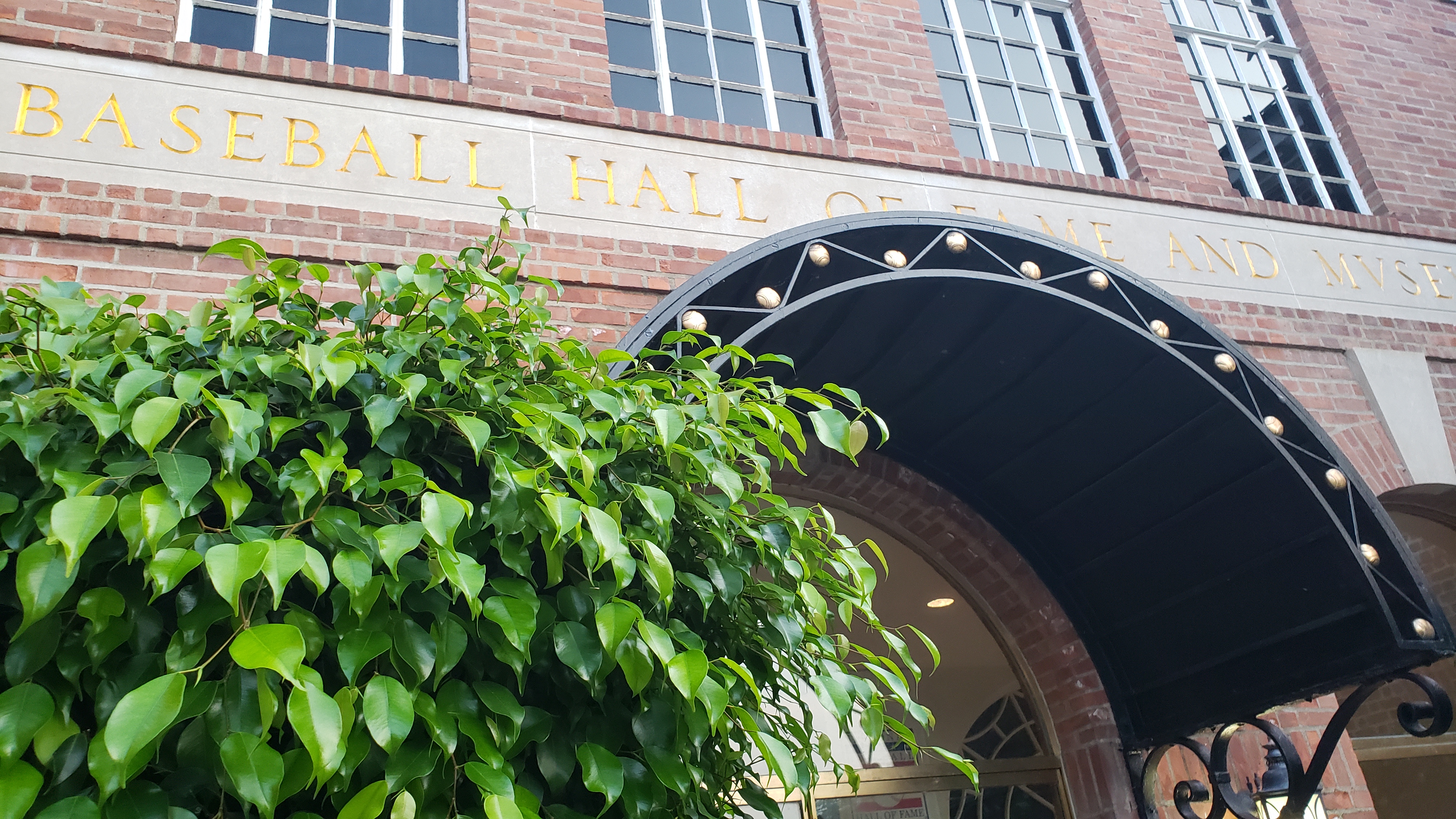
The welcoming entry to the Baseball Hall of Fame in Cooperstown, NY

As most readers probably know, the actual voting committee is the Baseball Writers' Association of America (BBWAA).  Prior to 2016, once a member, always a vote.  In 2016, several changes to the voting process were made (see my related Blog here) culling the list of voters to those who had covered the game in the prior 10 years.  This played out to remove a number of small vote ballots and increase percentages for those on the bubble.

There are a few overarching factors to cover before we get to the specifics.

1) A major, controversial specter over the Hall will continue to be how to handle candidates associated with Performance Enhancing Drug (PED) use in baseball primarily in the 1990s and early 2000s, an era for which many players accused are now appearing on the Hall of Fame ballot.  There are players whose on-field performance clearly merits first ballot election, however because of their associated with substances that enhanced their performance, some members of the BBWAA have been hesitant to cast votes their way at least in the 75% needed for induction (note that MOST of the voters did check the boxes for Barry Bonds and Roger Clemens, just not three out of four).  Because the official voting rules include the words "integrity, sportsmanship, and character," their reluctance is justified in my mind.  For my selection, I will not presume guilt, but if there is legal findings, first hand accounts (including Mitchell Report) or strong anecdotal evidence of PED use, I will strongly weigh against voting for the candidate.  You can count me in the "The PED STJ" type here in a blog I wrote.  That means, I absolutely think Barry Bonds, Alex Rodriguez, and Roger Clemens (and Manny Ramirez) are Hall of Famers without PEDs but I hold them accountable (just like the person who did lots of good things but committed a crime...he still committed a crime).

2) A change in consideration for me is how to assess pitchers.  Whereas the 300-win plateau with a low ERA reflective of the dead ball, or pitcher dominated, eras prior to 1970 used to be a norm, it's become increasingly more difficult to get wins in the era of specialty relievers with starters leaving the game before the end of the sixth inning many times in close games.  Conversely, however, one would think this would benefit starting pitchers ERA by seldom going through a lineup more than twice in some cases, rarely more than three times.  Also, after many years of closers not being strongly considered, Mariano Rivera became the first and only to date unanimous inductee to the Hall, along with high save count Trevor Hoffman and Lee Smith in recent years.  The doors have opened a bit in that regard.  In the end, for pitchers, I strongly weigh dominance over a reasonable period of time, along with Cy Young Awards, All-Star games, win titles, career saves, and ERA.

3) There is also first and last ballot bias.  First ballot candidates some BBWAA voters seem reticent to vote in to protect some sort of integrity of being a "first ballot hall of famer".  Evidence, three voters who did not include Ken Griffey Jr. in 2016.  Likewise, when a player is on his last ballot (as Tim Raines was in 2017Edgar Martinez in 2019, and Larry Walker in 2020) voters who previously withheld a vote tend to pay a bit more attention to their candidacy considering it's a final shot and vote favorably.