Who am I?

I'm from Houston, a graduate of the University of Texas, a fan of the Houston Astros and Houston Texans. But this blog will be about the "greater sports", whatever that means.

Follow me on Twitter: @lhd_on_sports

Labels

LHD_PotW (746) MLB (208) NFL (176) NCAA (140) NFL Playoffs (78) NBA (77) NHL (68)
Showing posts with label Jeff Kent. Show all posts

Thursday, January 15, 2026

2026 National Baseball Hall of Fame Vote

In an LHD on Sports Blog tradition, I am once again conveying my thoughts on who I would vote for if I had a BBWAA ballot for the 2026 National Baseball Hall of Fame.

The BBWAA vote will be revealed on Major League Baseball (MLB) Network on Tuesday, January 20, 2026.  The Hall of Fame vote reveal remains one of the most anticipated moments on the baseball calendar and certainly of the offseason.  Here is the 2026 National Baseball Hall of Fame Candidates Eligible for vote (via Baseball Reference with prior year percentage total for returning candidates).  75% of all ballots cast must include the players name for induction.


Induction Ceremony 2025

As most readers probably know, the actual voting committee is the Baseball Writers' Association of America (BBWAA).  Prior to 2016, once a member, always a vote.  In 2016, several changes to the voting process were made (see my related Blog here) culling the list of voters to those who had covered the game in the prior 10 years.  This played out to remove a number of small vote ballots and increase percentages for those on the bubble.

There are a few overarching factors to cover before we get to the specifics.

1) A major, controversial specter over the Hall will continue to be how to handle candidates associated with Performance Enhancing Drug (PED) use in baseball primarily in the 1990s and early 2000s, an era for which many players accused are now on the Hall of Fame ballot although the number is dwindling with Alex Rodriguez, Andy Pettitte and Manny Ramirez running out of eligibility.  There are players whose on-field performance likely merits election, however because of their associated with substances that enhanced their performance, some members (a minority) of the BBWAA have been hesitant to cast votes their way.  At least in the 75% needed for induction.  Because the official voting rules include the words "integrity, sportsmanship, and character," their reluctance is justified in my mind.  For my selection, I will not presume guilt, but if there are legal findings, firsthand accounts (including Mitchell Report) or strong anecdotal evidence of PED use, I will strongly weigh against voting for the candidate.  You can count me in the "The PED STJ" type here in a blog I wrote.  A constant I hear is "how can it be a Hall of Fame without Bonds, Clemens, Pete Rose, etc."  Their accomplishments, records, videos, etc. are more than prominent in the museum portion of the Hall of Fame and museum, but down by the plaques, you won't find them there.  Did the crime, do the time.

2) A change in consideration for me is how to assess pitchers.  Whereas the 300-win plateau with a low ERA reflective of the dead ball, or pitcher dominated, eras prior to 1970 used to be a norm, it's become increasingly more difficult to get wins in the era of specialty relievers with starters leaving the game before the end of the sixth inning many times in close games.  Conversely, however, one would think this would benefit starting pitchers ERA by seldom going through a lineup more than twice in some cases, rarely more than three times.  Also, after many years of closers not being strongly considered, Mariano Rivera became the first and only to date unanimous inductee to the Hall, along with high save count Trevor Hoffman, Billy Wagner, and Lee Smith in recent years.  The doors have opened a bit in that regard.  In the end, for pitchers, I strongly weigh dominance over a reasonable period of time, along with Cy Young Awards, All-Star games, win titles, career saves, and ERA.

3) There is also first and last ballot bias.  First ballot candidates some BBWAA voters seem reticent to vote in to protect some sort of integrity of being a "first ballot hall of famer".  Evidence, three voters who did not include Ken Griffey Jr. in 2016 or the one guy who didn't vote for Ichiro Suzuki in 2025.  Likewise, when a player is on his last ballot (as Tim Raines was in 2017, Edgar Martinez in 2019, Larry Walker in 2020 and Billy Wagner in 2025) voters who previously withheld a vote tend to pay a bit more attention to their candidacy considering it's a final shot and vote favorably.

Friday, January 13, 2023

2023 National Baseball Hall of Fame Vote

In a Longhorndave Blog tradition, I am once again conveying my thoughts on who I would vote for if I had a BBWAA ballot for the 2023 National Baseball Hall of Fame.

The BBWAA vote will be revealed on Major League Baseball (MLB) Network on Tuesday, January 24, 2023.  The Hall of Fame vote reveal remains one of the most anticipated moments on the baseball calendar and certainly of the offseason.  Here is the 2023 National Baseball Hall of Fame Candidates Eligible for vote (via Baseball Reference with prior year percentage total for returning candidates).  75% of all ballots cast must include the players name for induction.

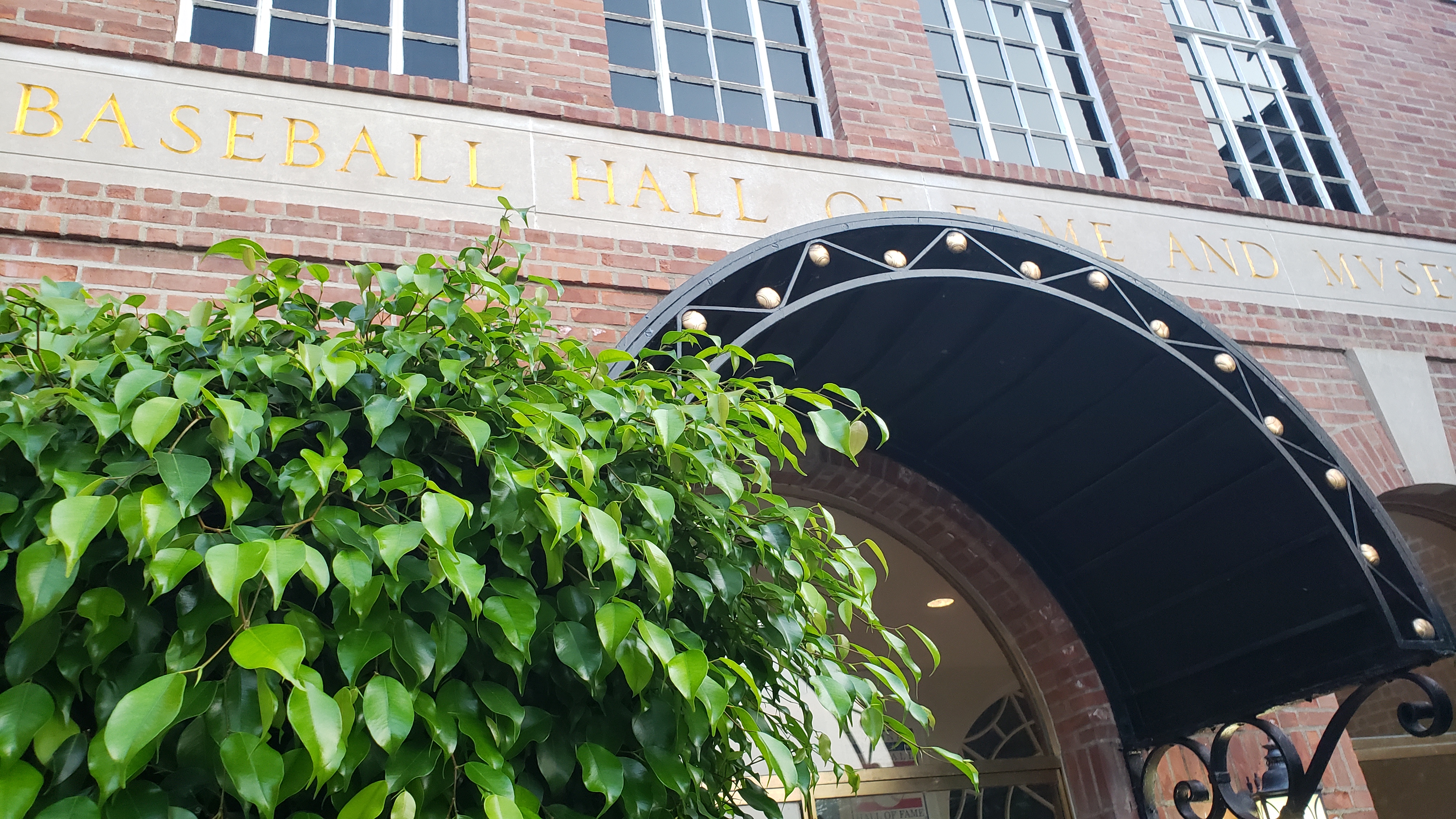
The welcoming entry to the Baseball Hall of Fame in Cooperstown, NY

As most readers probably know, the actual voting committee is the Baseball Writers' Association of America (BBWAA).  Prior to 2016, once a member, always a vote.  In 2016, several changes to the voting process were made (see my related Blog here) culling the list of voters to those who had covered the game in the prior 10 years.  This played out to remove a number of small vote ballots and increase percentages for those on the bubble.

There are a few overarching factors to cover before we get to the specifics.

1) A major, controversial specter over the Hall will continue to be how to handle candidates associated with Performance Enhancing Drug (PED) use in baseball primarily in the 1990s and early 2000s, an era for which many players accused are now appearing on the Hall of Fame ballot.  There are players whose on-field performance clearly merits first ballot election, however because of their associated with substances that enhanced their performance, some members of the BBWAA have been hesitant to cast votes their way at least in the 75% needed for induction (note that MOST of the voters did check the boxes for Barry Bonds and Roger Clemens, just not three out of four).  Because the official voting rules include the words "integrity, sportsmanship, and character," their reluctance is justified in my mind.  For my selection, I will not presume guilt, but if there is legal findings, first hand accounts (including Mitchell Report) or strong anecdotal evidence of PED use, I will strongly weigh against voting for the candidate.  You can count me in the "The PED STJ" type here in a blog I wrote.  That means, I absolutely think Barry Bonds, Alex Rodriguez, and Roger Clemens (and Manny Ramirez) are Hall of Famers without PEDs but I hold them accountable (just like the person who did lots of good things but committed a crime...he still committed a crime).

2) A change in consideration for me is how to assess pitchers.  Whereas the 300-win plateau with a low ERA reflective of the dead ball, or pitcher dominated, eras prior to 1970 used to be a norm, it's become increasingly more difficult to get wins in the era of specialty relievers with starters leaving the game before the end of the sixth inning many times in close games.  Conversely, however, one would think this would benefit starting pitchers ERA by seldom going through a lineup more than twice in some cases, rarely more than three times.  Also, after many years of closers not being strongly considered, Mariano Rivera became the first and only to date unanimous inductee to the Hall, along with high save count Trevor Hoffman and Lee Smith in recent years.  The doors have opened a bit in that regard.  In the end, for pitchers, I strongly weigh dominance over a reasonable period of time, along with Cy Young Awards, All-Star games, win titles, career saves, and ERA.

3) There is also first and last ballot bias.  First ballot candidates some BBWAA voters seem reticent to vote in to protect some sort of integrity of being a "first ballot hall of famer".  Evidence, three voters who did not include Ken Griffey Jr. in 2016.  Likewise, when a player is on his last ballot (as Tim Raines was in 2017, Edgar Martinez in 2019, and Larry Walker in 2020) voters who previously withheld a vote tend to pay a bit more attention to their candidacy considering it's a final shot and vote favorably.

Monday, January 17, 2022

2022 National Baseball Hall of Fame Vote


In a blog tradition, I am once again conveying my thoughts on who I would vote for if I had a BBWAA ballot for the 2022 National Baseball Hall of Fame.


The Hallowed Halls of Cooperstown Await greats to join them

The BBWAA vote will be revealed on Major League Baseball (MLB) Network on Tuesday, January 25, 2025.  The Hall of Fame vote reveal remains one of the most anticipated moments on the baseball calendar and certainly of the offseason.  Here is the 2022 National Baseball Hall of Fame Candidates Eligible for vote (via Baseball Reference with prior year percentage total for returning candidates).  75% of all ballots cast must include the players name for induction.

As most readers probably know, the actual voting committee is the Baseball Writers' Association of America (BBWAA).  Prior to 2016, once a member, always a vote.  In 2016, several changes to the voting process were made (see my related Blog here) culling the list of voters to those who had covered the game in the prior 10 years.  This played out to remove a number of small vote ballots and increase percentages for those on the bubble.

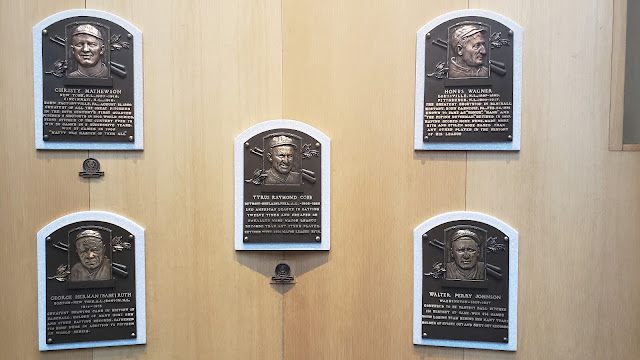
Inductees join the "Original 5" Class of 1939

There are a few overarching factors that cannot be ignored when it comes to voting to cover before we get to the specifics.


1) A major, controversial specter over the Hall will continue to be how to handle candidates associated with Performance Enhancing Drug (PED) use in baseball primarily in the 1990s and early 2000s, an era for which many players accused are now appearing on the Hall of Fame ballot.  There are players whose on-field performance clearly merits first ballot election, however because of their associated with substances that enhanced their performance, some members of the BBWAA have been hesitant to cast votes their way at least in the 75% needed for induction.  Because the official voting rules include the words "integrity, sportsmanship, and character," their reluctance is justified in my mind.  For my selection, I will not presume guilt, but if there is legal, eyewitness (including Mitchell Report) or strong anecdotal evidence of PED use, I will strongly weigh against voting for the candidate.  You can count me in the "The PED STJ" type here in a blog a few weeks ago.  That means, I absolutely think Barry Bonds, Alex Rodriguez, and Roger Clemens (and Manny Ramirez) are Hall of Famers without PEDs but I hold them accountable (just like the person who did lots of good things but committed a crime...he still committed a crime)

2) A change in consideration for me is how to assess pitchers.  Whereas the 300-win plateau with a low ERA reflective of the dead ball, or pitcher dominated, eras prior to 1970 used to be a norm, it's become increasingly more difficult to get wins in the era of specialty relievers with starters leaving the game before the end of the sixth inning many times in close games.  Conversely, however, one would think this would benefit starting pitchers ERA by seldom going through a lineup more than twice in some cases, rarely more than three times.  Also, after many years of closers not being strongly considered, Mariano Rivera became the first and only to date unanimous inductee to the Hall, along with Trevor Hoffman and Lee Smith in recent years.  The doors have opened a bit in that regard.  In the end, I strongly weigh dominance over a reasonable period of time, along with Cy Young Awards, All-Star games, win titles, career saves, and ERA.

3) There is also first and last ballot bias.  First ballot candidates some BBWAA voters seem reticent to vote in to protect some sort of integrity of being a "first ballot hall of famer".  Evidence, three voters who did not include Ken Griffey Jr. in 2016.  Likewise, when a player is on his last ballot (as Tim Raines was in 2017, Edgar Martinez in 2019, and Larry Walker in 2020) voters who previously withheld a vote tend to pay a bit more attention to their candidacy considering it's a final shot and vote favorably.  This year the normal last ballot bump bias is overcome by number 1 (Clemens and Bonds) or other factors (Schilling asking not to be on the ballot).  Unlike prior candidates listed above who were very likeable players, these three created more chasms than fans.  They won't see a big bump.  Everyone is set in their ways and in the case of Schilling, are more apt to go the other way.

Tuesday, December 29, 2020

2021 National Baseball Hall of Fame Vote

Who will join the Hall of Fame
legends this year?

In a tradition I let slip the last few years I am picking up again to convey my thoughts on who I would vote for if I had a ballot for the 2021 National Baseball Hall of Fame.  As most readers probably know, the actual voting committee is the Baseball Writers' Association of America (BBWAA).  Prior to 2016, once a member, always a vote.  In 2016, several changes to the voting process were made (see my Blog here) culling the list of voters to those who had covered the game in the prior 10 years.  This played out to remove a number of small vote ballots and increase percentages for those on the bubble.

The BBWAA vote will be revealed on Major League Baseball (MLB) Network on Tuesday, January 26, 2021.  The Hall of Fame vote reveal remains one of the most anticipated moments on the baseball calendar and certainly of the offseason.  Here is the 2021 National Baseball Hall of Fame Candidates Eligible for vote (via Baseball Reference with prior year percentage total for returning candidates).  75% of all ballots cast must include the players name for induction.

There are a few overarching factors that cannot be ignored when it comes to voting.

1) A major controversial specter over the Hall will continue to be Performance Enhancing Drug (PED) use in baseball primarily in the 1990s, an era for which many players accused are now appearing on the Hall of Fame ballot.  There are players whose on-field performance clearly merits first ballot election, however because of their associated with substances that enhanced their performance, many members of the BBWAA has been hesitant to cast votes their way at least in the 75% needed for induction.  Because the official voting rules include the words "integrity, sportsmanship, and character," their reluctance is justified in my mind.  For my selection, I will not presume guilt, but if there is legal, eye witness (including Mitchell Report) or strong anecdotal evidence of PED use, I will strongly weigh against voting for the candidate.

2) A change in consideration for me is how to assess pitchers.  Whereas the 300 win plateau with low ERAs reflective of the dead ball, or pitcher dominated, eras prior to 1970 used to be a norm, it's become increasingly more difficult to get wins in the era of specialty relievers with starters leaving the game before the end of the sixth inning many times in close games.  Conversely, however, one would think this would benefit starting pitchers ERA by seldom going through a lineup more than twice in some cases, rarely more than three times.  Also, after many years of closers not being strongly considered, Mariano Rivera became the first and only to date unanimous inductee to the Hall, along with Trevor Hoffman and Lee Smith in recent years.  The doors have opened a bit in that regard.  In the end, I strongly weigh dominance over a reasonable period of time, along with Cy Young Awards, All-Star games, Win titles, career saves, and ERA.

3) There is also first and last ballot bias.  First ballot some BBWAA voters will hold their vote to protect some sort of integrity of being a "first ballot hall of famer".  Evidence, three voters who did not include Ken Griffey Jr. in 2016.  Likewise, when a player is on his last ballot (as Tim Raines was in 2017, Edgar Martinez in 2019, and Larry Walker in 2020) voters who previously withheld tend to pay a bit more attention to their candidacy considering it's a final shot and vote accordingly.  Editors note, I advocated for Walker and Martinez all along, did not so for Raines.  So a bump is normal (up to 15% for a candidate close to election).  Neither of these is a major factor this year as the ballot lacks any strong first ballot candidates, and no candidates in their final year (however, 2022 will be a doozy).

With a limit of ten players on a ballot, here are the players I would put on my ballot (in order of my credibility).  I don't use all ten votes or even half.  In fact, my prior Blog ballot in 2018, only two are not yet in, they will appear below.

Billy the Kid
1) Billy Wagner - Last Blog I did in 2018 I had listed him as my 7th pick out of 8.  Well, the other six are in.  The more I see Billy the Kid, the more I think he's getting short changed.  Especially when comparing to four specialty relief pitchers already in the Hall (Eckersley, Sutter, Fingers, and Gossage) as he has 30 more saves than the best of them.  And a lower ERA.  And a better K/9 IP.  His 7 All Star Game appearances are comparable to that lot as well.  He sits sixth in career saves (no current player will threaten him for years to come) and his stuff was dominant.  I noted above we've seen an increase in relievers recently, but I believe we're going to see fewer relievers going forward with huge career numbers (which takes longevity) because so many are going to flame out with arm problems given their use.  More reason to recognize his greatness.  Wags should get strong consideration.

Factors against him: Only 900 career IP, lack of postseason success

Wagner jumped from around 17% in year four up to over 30% in year five.  As several high profile inductees cleared the list to make room on ballots and he seems to be getting more scrutiny which is good.  I'm still guessing he'll never gets in during the ten year window, but may get in on a veteran ballot in decades to come once the Hall figures out how to assess relievers.

Helton Belts one
2) Todd Helton - Beltin' Helton was an offensive machine for a number of great Colorado Rockies teams.  Some point to Coors Field for his gaudy offensive numbers, however they are way too good to ignore.  His .316 career batting average is only bested by Vlad, Puckett, Boggs, and Gwynn for hitters since 1980.  He was a batting and RBI champion, 5x All Star, 4x Silver Slugger, 3x Gold Glove Award winner.  He was also selective at the plate with over 1300 career walks and a .414 career OBP.  A complete package, the only drawback is hitter friendly Coors Field.

Factors against him: Playing in Denver, huge home/road split differences

Helton jumped from 16.5% to 29.2% in his first to second year (now in his third).  This is encouraging.  Probably not the next two, but assuming his momentum keeps going he'll be to 50% in a couple of years and then likely in by year 7 or 8.

Kent joins Clemens and Bonds as the only
former MVPs on the ballot

3) Jeff Kent -  Last Blog I did in 2018 I had listed him as my 8th pick out of 8.  One of the top offensive second basemen of all time.  His line across the major stats is .290, 377, and 1518.  He has an MVP in his closet, and three other Top 10 finishes.  Add to that six All-Star appearances and four silver sluggers.  He's 54th all time in RBI (more than Mantle, Vlad, Rice) with most of those eligible ahead of him already inducted.  His power numbers dwarf Ryne Sandberg and Roberto Alomar, but is getting very little buzz or momentum.

Factors against him: Below average on defense, late bloomer, played in a power era in which his home run numbers aren't considered extraordinary, cold to media.

Kent started around 15% and only last year got more than 20% with 27.5% of the votes.  Now in his eighth year it seems like he won't get close.  Not a popular guy around the league from my memory he may not get much love on veterans ballots either.

Shilling was a dominant force
4) Curt Schilling - Schilling is a candidate it has taken me a while to assess to the point I think he should be in (prior years I did not).  Note:  I do not weigh at all anything he has done or said outside of the game, politically, business deals, or otherwise.  Just the numbers within the game.  I think I have unfairly held him back because of my #2 "factor" above.  That is assessing pitchers.  I've just felt that his 215 wins over a long career is mediocre.  Winning percentage below .600, ERA north of 3.45 doesn't jump out.  But looking at pitchers of his era, he was elite for a substantial part of his career.  Including four Top 5 Cy Young finishes, thrice runner up (which sometimes just comes down to who you are against).  Four times led the league in CG, twice in IP.  15th in career strikeouts, all but Clemens ahead of him are in the Hall.  Note he has a lower WHIP, better K/9, and half the walks of Clemens.  And I don't vote FOR a guy because of postseason, I will let that play into a borderline and his postseason successes are legendary.  So for me it's a vote "for" this year.

Factors against him: The aforementioned lackluster wins/ERA take him from can't ignore to can ignore but mostly his interaction with the media and political opinions.

Schilling went from 61% to 70% from year 7 to year 8.  Normally this momentum would be certain to get in, however that 30% against him may be inconvincible.  Like Kent, if he doesn't get in by 2022, he may not get veterans committee support due to his lack of likeability within the game.

First four out

5) Scott Rolen - Really good, but Hall of Fame worthy?  A good Twitter debate I had noted that by most any measure, he was a Top Ten 3B of all time.  The position is underrepresented it seems in Cooperstown.  Numbers are solid but not overwhelming.  Certainly elite defense and 7 All Star games are good.  I just don't feel like when you played a team with Rolen, he was the guy to watch out for in the lineup.  Only two Top 15 MVP finishes.  Never led the league in any major statistical category.  Only one Silver Slugger.  I'll keep my eye on him going forward but does no make the cut for now.

Factors against him: Not elite at anything, very good at everything.  No overwhelming stat accomplishment at which to point.

He's surging pretty well, from 10.2%, to 17.2%, to 35.3% in three years.  This is a trajectory which leans toward getting in.  Also a popular guy in the league on good teams, would likely get in on a veterans ballot if the surge stalls out.  Not a chance this year.

6) Andruw Jones - Power, speed, and defense, he was a 5-tool player.  Started his career at 19, but wore out at Age 35, he still hit well over 400 HR.  His .254 batting average really drags him down, with a lack of huge walk numbers it leaves him only .337 OBP.  His defense was his calling card, but also won a Silver Slugger and narrowly missed the MVP in 2005 to Albert Pujols.  I will keep him on my radar, that batting average though.

Factors against him: Low batting average, barely was a factor after age 30.

After two years of barely staying on the ballot, is starting to at least get discussion.  Year 3 was 19.4% so he'll stay on the ballot through 10 years.  I've seen more social media campaigning on him than anyone.  I don't think he gets in after the 10 years.

7) Bobby Abreu - I will at least say he needs more discussion.  If you look at all the 2021 NBHOF candidates OPS, the only one ahead of him not associated with PEDs is the aforementioned Todd Helton.  Switch hitter with eight years in a row of over 100 walks, was durable playing 162 twice during his career.  Modest power but produced 100 RBI in eight seasons.  Good speed as well with 400 career SBs.  But no Top 10 MVP finishes, one Silver Slugger and one Gold Glove and only two All Star games.  I think overlooked but not worthy in the end.

Factors against him: Never seemed elite related to peers (see AS Games, SS, GG), not a lot of home run power

Barely eeked out 5.5% of the vote in his first ballot certainly is better than that.  In a low year of top candidates (Jeter, Walker cleared, no major first timers) he may get a bump from voters who maxed out their 2020 ballot at 10.  Little chance of ever being inducted.

8) Aramis Ramirez - Interestingly close comparison to Rolen on offense.  More HR, more RBI, a better career batting average, slugging almost identical.  Did not get on base as much.  Good defender, but not elite like Rolen.  Three Top 10 MVP votes (but never higher than 9), only 3 All Star games.  A single silver slugger.  This is where I draw the line just above he and Rolen, as there starts to be a lot of guys that look like this over a long career.

Factors against him: Never seemed like an elite player at his time.  Very good across the board, not extraordinary

Ramirez is in his first year on the ballot, there's a chance he doesn't get 5%.  He should get more like 10%.  Another guy I don't see making it in the long run.

Most of the remaining repeat candidates fall into the PED category.  Their stats are more than deserving, even before they might have juiced, but would not get my vote): Barry Bonds, Sammy Sosa, Roger Clemens, Manny Ramirez, Gary Sheffield, Andy Pettitte.  All would easily be in without it except maybe Pettitte who would be close anyway (would not get my vote even without PEDs).

The only other returning candidate not discussed is Omar Vizquel.  Like Schilling, I don't consider his recent off the field issue in my voting.  I just don't see enough offense.  The defense was there.  There's a long history of middle infielders leaning on good defense and good enough offense to get in, but I don't see Vizquel in that category.  Only a .336 OBP, worst of this pool of candidates besides Torii Hunter.  He got >50% of the vote last year in his 4th ballot and probably will get in by the BBWAA.  I'd be in the 25% not voting for him,

Newcomers that might stay on the ballot (besides Ramirez mentioned above): Torii Hunter, Mark Buehrle, Tim Hudson.  I don't see any of the rest staying.

So my opinions aside, I think only Curt Schilling gets in this year.  May be a null class.

Here is my mock ballot


The 2022 Ballot will be a battle royal.  Likely to contain the last chances for Barry Bonds, Roger Clemens, Sammy Sosa, and Curt Schilling (if not this year).  Will include PED suspended Alex Rodriguez, DH extraordinaire David Ortiz, and former MVP Jimmy Rollins in their first ballots.  Mark Teixeira another strong first time candidate.  Buckle up buttercup, next years blog of this sort will be a doozy!  

Note that the 2020 inductees will be honored this year since no ceremony was held last year.  That includes Derek Jeter, Larry Walker, Ted Simmons, and Marvin Miller on July 25, 2021.

Sunday, December 31, 2017

2018 National Baseball Hall of Fame Vote

On Wednesday, January 24, 2018, the Baseball Writers Association of America (BBWAA) vote for enshrinement to the National Baseball Hall of Fame will be revealed. The BBWAA holds the keys to such an elite fraternity, which must be a daunting task. They are voting on players to proverbially sit next to Ruth, Aaron, Mays, Mathewson and the like.  As done in years past, I will provide my ballot as if I were a BBWAA member.

Here is the full 2018 Ballot (courtesy of Baseball-Reference.com)

There are a few major factors that cannot be ignored when it comes to voting.

1) The specter over the Hall will continue to be Performance Enhancing Drug (PED) use in baseball primarily in the 1990s, an era for which many players accused are now appearing on the Hall of Fame ballot.  There are players whose performance clearly merits first ballot election, however because of their associated with substances that enhanced their performance, members of the BBWAA has been hesitant to cast votes their way.  This may have taken a turn in the 2017 vote when Barry Bonds and Roger Clemens, two who have the most clear credentials, surpassed 50% for the first time.  This could be in response to the induction of Mike Piazza who many believed used PEDs but was not directly linked.  Many believe the same for Ivan Rodriguez, who was implicated by Jose Canseco, a source who has proven reliable at times, and not so much other times.  Will this break down the mental conundrum that may writers have?  Early returns show more support for Bonds and Clemens.  Because the official voting rules include the words "integrity, sportsmanship, and character" and integrity, so their reluctance is justified in my mind.  For my selection, I will not presume guilt, but if there is legal (including Mitchell Report) or strong anecdotal evidence of PED use, I will strongly weigh against voting. 

2) A batch of candidates making their way onto the ballot or relief pitchers who specialized in finishing games in which their team was winning by 3 or fewer runs.  In other words, closers.  To date, Bruce Sutter, Rollie Fingers, Dennis Eckersley, and Goose Gossage are the modern day versions in the Hall.  Two candidates on the ballot have more saves than each of them.  It's a measure of how the game has changed (with the advent of the specialty closer) whether or not they get strong consideration from the BBWAA.

3) A final point of discussion is how to handle starting pitching.  Whereas the 300 win plateau used to be a norm, it's become increasingly more difficult to get wins in the era of specialty relievers with starters leaving the game before the end of the sixth inning many times in close games.  Conversely, however, one would think this would benefit starting pitchers ERA by seldom going through a lineup more than 3 times.  In the end, I strongly weigh dominance over a discernible period of time, along with Cy Young Awards, All-Star games, Win titles, and ERA.

4) There is also first and last ballot bias.  First ballot some BBWAA voters will hold their vote to protect some sort of integrity of being a "first ballot hall of famer".  Evidence, three voters who did not include Ken Griffey Jr. in 2016.  Likewise, when a player is on his last ballot, as Tim Raines was last year, voters who previously withheld tend to pay a bit more attention to their candidacy considering it's a final shot.  So a bump is normal (up to 15% for a candidate close to election).

With a limit of ten players on a ballot, here are the players I would put on my ballot (in order of credibility).  I don't use all ten votes.

1) Chipper Jones - One of the best third basemen of all time, one of the best switch hitters of all time, and he played plus defense.  He won an MVP, a batting title, and eight All-Star games.  Consistent post-season hitter (And tons of post-season at bats).  He would have been rookie of the year if not for the imported Japanese veteran Hideo Nomo.  It's hard to find a flaw in his game.  Chipper was well loved and respected by the media, he should have no problem getting on his first ballot with a very high percentage of the vote.

Factors against him: Short of 500 HR, could have won more World Series titles, first ballot bias

Chipper is pretty much a slam dunk.  First ballot bias may keep him around 95%, but there is hardly a case against him (the above is pretty weak).


2) Jim Thome - Power power power.  His 612 HR sits eight on the all-time home run list (and two ahead of him have been implicated for PED usage).  While like many power hitters, he did strike out a lot, he also walked a lot, having led the league in bases on balls three times and finishing with an on base percentage over .400 (despite a pedestrian .276 career batting average).  His career seemed to be steady for about 15 years, where he wasn't among the Top 3 or 4 in the game, but always among the Top 10

Factors against him: Never won an MVP, never won a World Series, only led the league in HR once, never led the league in RBI, first ballot bias.

Because of the power era in which he played, some may discount his power.  He never looked the part of a PED user.  He won't get as many votes as fellow 600 HR member Ken Griffey Jr., but should finish in the mid to upper 80% range and get in on the first ballot.


3) Vladimir Guerrero - I'm surprised he did not get in last year.  Clearly has the numbers, so it must have been first ballot bias.  Vlad was a five tool player (.319 average. 449 HR, top arm/glove in the league, and plus speed). Nine All-Star Games, an MVP, and a hit title.  His career numbers fall short of some major benchmarks (like 500 HR) as he retired at age 36.  If he had taken PEDs he might have played another 5 years and approached 600 HR.  No doubt one of the most feared hitters for a decade or so.

Factors against him: Lack of single team identity, no World Series titles, short of 500 HR

To me, he meets all of the criteria and should get in with about 80% of vote.


4) Trevor Hoffman - Another one who should have gotten in last year and was just five ballots short.  One of two members of the 600 career save club (and we know the other will get in first ballot).  That's 40 saves per year for 15 years (average).  Seven All-Star appearances and twice finished runner up in the Cy Young, which is rare for a reliever.

Factors against him: reliever bias, played in a small market, was probably never the best reliever in the game at any given time

This is his year. The NL reliever of the year award is named after him, he'll get in with 81% of the vote or so.


5) Larry Walker - I've been pushing Walker for several years now.  He was another 5-tool player, finished his career with a .313 batting average, higher than anyone else on the ballot besides Vladimir Guerrero.  Let me repeat that, second highest batting average of anybody on the ballot. Also stole 200 bases, also hit 383 home runs. He has so many gold gloves he probably had to build an extra section on his trophy case. Like 2017 inductee Jeff Bagwell, he won one MVP. He's also a member of the .400 OBP club (with Manny Ramirez, Jones, Thome, Bonds, and Edgar Martinez the only six on the ballot).

Factors against him: Perceived higher numbers due to playing in Colorado, soft-spoken personality, injury-prone (only 4 seasons of 140+ games).

He only received 22% of the vote last year (very slight up tick), that needs to trend up significantly for people to start noticing. He's not going to make it.


6) Edgar Martinez - He's of the mold of the previous two players. Hit for high average, good (but not awe inspiring) power, gets on base all the time. While I am not a fan of the DH, if MLB has it as a position, you can't hold that against him. Edgar was a career .312 hitter, with .418 OBP (highest on the ballot besides Bonds), slugged .515 (more than Fred McGriff). He's also a member of the 300 HR club for a guy who didn't try to lift the ball as much as others.

Factors against him: Primarily a DH, played in small market, lack of speed

He was voted for the affirmative on 59% of last years ballots, moving up 15% which was a big jump.  I've seen more buzz about Edgar this year than in years passed.  This is his penultimate appearance on the ballot and I think he falls just short at 73%.  Then gets in on his last ballot.


7) Billy Wagner - The more I see Billy the Kid, the more I think he's getting short changed.  Especially when comparing to the four biggest specialty relief pitchers already in the Hall (Eckersley, Sutter, Fingers, and Gossage) as he has 30 more saves than the best of them.  And a lower ERA.  And a better K/9 IP.  His 7 All Star Game appearances are comparable to all as well.  He sits sixth in career saves and his stuff was dominant.  I noted above we're teetering on how to treat relievers, I believe we're going to see fewer relievers going forward with huge career numbers because so many are going to flame out with arm problems given their use.  Wags should get strong consideration.

Factors against him: relief pitcher bias, lack of postseason success

He got about 10% vote each of his first two years.  He needs to start climbing or I don't think he can ever reach the top.  I'm guessing he never gets in during the 10 year window, but may get in on a veteran ballot in decades to come once the Hall figures out how to handle relievers.


8) Jeff Kent - Quietly one of the top offensive second basemen of all time.  His line across the major stats is .290, 377, and 1518.  He has an MVP in his closet, and three other Top 10 finishes.  Add to that six All-Star appearances.  His power numbers dwarf Ryne Sandberg and Roberto Alomar, but is getting very little buzz or momentum.

Factors against him: Very average on defense, played in a power era in which his home run numbers aren't considered extraordinary, cold to media

With about 17% of the vote the last two years, no reason to think he'll move significantly now, or over the next five years.

First four out

9) Mike Mussina - Without 300 wins or a dominant ERA, he's not quite Hall worthy in my opinion.  No Cy Young Awards, a one-time 20 game winner, five All-Star games.  Career ERA is 3.68, not spectacular even in the power era (considering he didn't face line ups four times in most starts). 

Factors against him: Doesn't have 300 wins, not dominant, played on winning teams but never won a World Series.

At 52%, he has surpassed Curt Schilling and may be on a trajectory for eventual induction, which was not looking as good last year. 

10) Fred McGriff - You can't ignore the near 500 home runs, but he hung on a while to get so close and wasn't elite enough in his prime to warrant the Hall. Average defense, below average speed, not an outstanding OBP. He also never broke 110 RBI in a season.

Factors against him: Unspectacular batting average, lack of dominating seasons, lack of speed

At only 22% last year, he's not moving much. I doubt he gets much closer in this, or his final year on the ballot in 2019.  Could be a veteran ballot candidate, was very popular with teammates and media and did things the right way.

11) Curt Schilling - Seems to get way more media discussion than others as deserving (like Kent or Mussina or even a Bagwell).  3.46 ERA and barely over 200 wins (216).  For careers starting after World War II, only Don Drysdale has fewer wins in the Hall (six fewer seasons, ERA half a point better).  Postseason success aside, it's not a strong case at all.  His willingness to share his unpopular political views also seem to reduce his support.

Factors against him: Low wins, unspectacular ERA, political opinions

At 45% of the vote, he took a step back in 2017.  While sharing of ones political opinions, whether popular or controversial, should not be a factor in the Hall election, it seems to be.  The more he talks, the less support he gets.  I think he will never cross the 75% threshold and is also unlikely to get in on a veterans ballot.

12) Andruw Jones - Power, speed, and defense, he was a 5-tool player.  Started his career at 19, but wore out at Age 35, he still hit well over 400 HR.  His .254 batting average really drags him down, with a lack of huge walk numbers it leaves him only .337 OBP.  His defense was his calling card, but also won a Silver Slugger and narrowly missed the MVP in 2005 to Albert Pujols.

Factors against him: Low batting average, barely was a factor after age 30.

The remaining repeat candidates fall into the PED category.  Their stats are more than deserving, even before they might have juiced, but would not get my vote): Barry Bonds, Sammy Sosa, Roger Clemens, Manny Ramirez, Gary Sheffield.  All would easily be in without it.

Newcomers that might stay on the ballot (besides those mentioned above): Scott Rolen, Johan Santana

So my opinions aside, here's who I think gets in (in order by vote percentage).
Chipper Jones
Jim Thome
Trevor Hoffman
Vlad Guerrero

They will join "Modern Baseball" enshrinees Jack Morris and Alan Trammell along with J.G. Taylor Spink Award (writers) winner Sheldon Ocker and the Ford C. Frick Award (broadcasting excellence) winner Bob Costas.  The Modern Baseball ballot is intriguing in the recency of the inductees to the writers ballot and may be discussed on a future Blog.  The induction ceremony is a homecoming of baseball elite, and will be July 29, 2018.

Friday, December 30, 2016

2017 National Baseball Hall of Fame Vote

On Wednesday, January 18, 2017, the Baseball Writers Association of America (BBWAA) vote for enshrinement to the National Baseball Hall of Fame will be revealed. The BBWAA holds the keys to such an elite fraternity, which must be a daunting task. They are voting on players to proverbially sit next to Ruth, Aaron, Mays, Mathewson and the like.  As done in years past, I will provide my ballot as if I were a BBWAA member.

Here is the full 2017 Ballot (courtesy of Baseball-Reference.com)

There are a few major factors that cannot be ignored when it comes to voting.

1) The specter over the Hall will continue to be Performance Enhancing Drug (PED) use in baseball primarily in the 1990s, for which many players accused are now appearing on the Hall of Fame ballot.  There are players whose performance clearly merits first ballot election, however because of their associated with substances that enhanced their performance, members of the BBWAA has been hesitant to cast votes their way.  Because the official voting rules include the words "integrity, sportsmanship, and character" and integrity, so their reluctance is justified in my mind.  For my selection, I will not presume guilt, but if there is legal (including Mitchell Report) or anecdotal evidence of PED use, I will strongly weigh against voting.  I'm not alone, since fewer than half of voters have written in Barry Bonds or Roger Clemens, who no doubt Hall of Famers if not for PEDs.

2) A batch of candidates making their way onto the ballot or relief pitchers who specialized in finishing games in which their team was winning by 3 or fewer runs.  In other words, closers.  To date, Bruce Sutter, Rollie Fingers, Dennis Eckersley, and Goose Gossage are the modern day versions in the Hall.  Three candidates on the ballot have more saves than each of them.  It's a measure of how the game has changed (with the advent of the specialty closer0 whether or not they get strong consideration from the BBWAA.

3) A final point of discussion is how to handle starting pitching.  Whereas the 300 win plateau used to be a norm, it's become increasingly more difficult to get wins in the era of specialty relievers with starters leaving the game before the end of the sixth inning many times in close games.  Conversely, however, one would think this would benefit starting pitchers ERA by seldom going through a lineup more than 3 times.  In the end, I strongly weigh dominance over a discernible period of time, along with Cy Young Awards, All-Star games, Win titles, and ERA.

4) There is also first and last ballot bias.  First ballot some BBWAA voters will hold their vote to protect some sort of integrity of being a "first ballot hall of famer".  Evidence, three voters who did not include Ken Griffey Jr. last year.  Likewise, when a player is on his last ballot, voters who previously withheld tend to pay a bit more attention to their candidacy considering it's a final shot.  So a bump is normal (not significant, but 5% ish).


With a limit of ten players on a ballot, here are the players I would put on my ballot (in order of credibility).  I don't use all ten votes.

1) Vladimir Guerrero - A five tool player (.319 average. 449 HR, top arm/glove in the league, and plus speed). Nine All-Star Games, an MVP, and a hit title.  His career numbers fall short of some major benchmarks (like 500 HR) as he retired at age 36.  If he had taken PEDs he might have played another 5 years and approached 600 HR.  No doubt one of the most feared hitters for a decade or so.

Factors against him: Lack of single team identity, no World Series titles, first ballot bias

To me, he meets all of the criteria and should get in with about 80% of vote.

2) Jeff Bagwell - He was an offensive machine in the mid-1990's, career numbers reflect that (.297, 449 HR, 1529 RBI). More walks than anyone else on the ballot besides Bonds and Sheffield (fear factor and eye), .408 OBP.  He also stole 200 bases and was an above average 1B (Gold Glove in the closet). No hard evidence of PED's, although suspicion without evidence seems to be an argument against.  His numbers are nearly identical to Vlad yet he sits here in his seventh year on the ballot.

Factors against him: Perceived use of PEDs, playing in a small market, lack of postseason success.

At 71.6% last year, it would be historic if he dropped back from that.  He'll get in this time (just barely, not much over 77%).

3) Trevor Hoffman - One of two members of the 600 career save club (and we know the other will get in first ballot).  That's 40 saves per year for 15 years (average).  Seven All-Star appearances and twice finished runner up in the Cy Young, which is rare for a reliever.

Factors against him: reliever bias, played in a small market, was probably never the number one reliever at any given time

At 67.3% last year, the first ballot bias should be overcome. The NL reliever of the year award is named after him, he'll get in with 81% of the vote or so.

4) Ivan Rodriguez - The only think moving him from number 1 to number 4 is potential PED suspicions.  Note that for Rodribues, the evidence against him is mostly anecdotal (from Jose Canseco).  I suspect he was using, but not extensively.  That behind us, his numbers as a catcher are elite:  .296 average, 311 HR, an MVP, best arm behind the plate in the game and a great teammate.  Ten straight Gold Gloves (six of those years he won a Silver Slugger).

Factors against him: Perceived PEDs, first ballot bias

Tough to forecast if he'll make the cut due to PED suspicions.  There might be enough to hold back their vote to keep him in the 65% range.  Most interesting total to see on the ballot IMO.

5) Larry Walker - He was another 5-tool player, finished his career with a .313 batting average, higher than anyone else on the ballot besides Vladimir Guerrero.  Let me repeat that, second highest batting average of anybody on the ballot. Also stole 200 bases, also hit 383 home runs. He has so many gold gloves he probably had to build an extra section on his trophy case. Like Bagwell, he won one MVP. He's also a member of the .400 OBP club (with Bagwell, Manny Ramirez, Bonds, and Edgar Martinez the only four on the ballot).

Factors against him: Perceived higher numbers due to playing in Colorado, soft-spoken personality, injury-prone (only 4 seasons of 140+ games).

He only received 15.5% of the vote last year (regressing), that needs to trend up significantly for people to start noticing. He's not going to make it.

6) Edgar Martinez - He's of the mold of the previous two players. Hit for high average, good (but not awe inspiring) power, gets on base all the time. While I am not a fan of the DH, if MLB has it as a position, you can't hold that against him. With the previous two, defense pushes their case, for Edgar it can't but he still deserves it. Career .312 hitter, .418 OBP, slugged .515 (more than Fred McGriff). He's also a member of the 300 HR club for a guy who didn't try to lift the ball as much as others.

Factors against him: Primarily a DH, played in small market, lack of speed

He was voted for the affirmative on 43% of last years ballots he's moving up slowly.  He needs to get closer to 50% to continue the momentum, now in his eighth year probably not going to make it now

7) Billy Wagner - This pick might raise some eyebrows, but when comparing to the four major relief pitchers already in the Hall (Eckersley, Sutter, Fingers, and Gossage), he has 30 more saves than each of them.  And a lower ERA.  And a better K/9 IP.  His 7 All Star Game appearances are comparable to all as well.  He sits sixth in career saves and his stuff was dominant.  I noted above we're teetering on how to treat relievers, I believe we're going to see fewer relievers going forward with huge career numbers because so many are going to flame out with arm problems given their use.  Wags should get strong consideration.

Factors against him: relief pitcher bias, lack of postseason success

Only in his second year (10% vote last year), he's more likely to fall off the ballot than to surge to even more than 25%.  I'm guessing he never gets in during the 10 year window, but may get in on a veteran ballot in decades to come once the Hall figures out how to handle relievers.

8) Lee Smith - As mentioned, the Hall of Fame is still figuring out how to accommodate closers, it's my opinion that they are indeed a key element to the game and the best of the best should be included. With Smith, it's not about the numbers (ERA, W-L) as much as the raw pile of saves he accumulated (478, which was tops for a long time after his retirement). No matter where he played, he never seemed phase by a momentary lapse of success. Fourteen seasons in a row of 25 or more saves shows a level of consistency matched by few. If there are going to be closers in the HoF, Smith should be there.

Factors against him: relief pitcher bias, wasn't overpowering, lacks team identity

Languishing around 35% of the vote last year, he'll need more than double to get in in this, his last and 15th year.  He might get to 50% and like Wagner, maybe get in later once relievers get their due.

9) Jeff Kent - Quietly one of the top offensive second basemen of all time.  His line across the major stats is .290, 377, and 1518.  He has an MVP in his closet, and three other Top 10 finishes.  Add to that six All-Star appearances.  His power numbers dwarf Ryne Sandberg and Roberto Alomar, but is getting very little buzz or momentum.

Factors against him: Very average on defense, played in a power era in which his home run numbers aren't considered extraordinary, cold to media

With below 20% of the vote last year, no reason to think he'll move significantly now, or over the next six years.

First four out

10) Tim Raines - Rock falls just short on the numbers. Besides SB's (of which he is more than deserving), his average and power are lackluster, no Gold Gloves. He did accumulate 2,600 hits playing to the age of 40.

Factors against him: mostly small market teams, average defense, never was higher than 5th in an MVP vote, not a feared hitter.

At 69.8% last year and in his last year, wow this is going to be close.  How much of a last ballot bump will he get?

11) Mike Mussina - Without 300 wins or a dominant ERA, he's not quite Hall worthy in my opinion.  No Cy Young Awards, a one-time 20 game winner, five All-Star games.  Career ERA is 3.68, not spectacular even in the power era (considering he didn't face line ups four times in most starts). 

Factors against him: Doesn't have 300 wins, not dominant, played on winning teams but never won a World Series.

At 43%, surprising he's below Schilling.  Won't move much until he approaches the end of the ballot.  Not likely to get in during the 10 year window.

12) Fred McGriff - You can't ignore the near 500 home runs, but he hung on a while to get so close and wasn't elite enough in his prime to warrant the Hall. Average defense, below average speed, not an outstanding OBP. He also never broke 110 RBI in a season.

Factors against him: Unspectacular batting average, lack of dominating seasons, lack of speed

At only 21% last year, he's not moving much. I doubt he gets much closer in this, or the next two years.  Could be a veteran ballot candidate, was very popular with teammates and media and did things the right way.

13) Curt Schilling - Seems to get way more media discussion than others as deserving (like Kent or Mussina or even a Bagwell).  3.46 ERA and barely over 200 wins (216).  For careers starting after World War II, only Don Drysdale has fewer wins in the Hall (six fewer seasons, ERA half a point better).  Postseason success aside, it's not a strong case at all.

Factors against him: Low wins, unspectacular ERA

At 52% of the vote, he could make a move (fourth highest returning).  If he can get to 60% now he could eek across 75% by year ten.

The remaining repeat candidates fall into the PED category.

Steroid specter (stats more than deserving, even before they might have juiced, but would not get my vote): Barry Bonds, Sammy Sosa, Roger Clemens, Manny Ramirez, Gary Sheffield.  Ramirez gets his first consideration, it will be most interesting to see how he fares.  Sheffield was surprisingly low last year considering he's a member of the 500 HR club with a batting average over .290.  Goes to show the PED mountain is too high to climb.

Newcomers that might stay on the ballot (besides those mentioned above and Ramirez): Jorge Posada

So my opinions aside, here's who I think gets in (in order by vote percentage).
Trevor Hoffman
Vlad Guerrero
Tim Raines
Jeff Bagwell

They will join "Today's Game" enshrinees John Schuerholz and Allan H. “Bud” Selig, along with J.G. Taylor Spink Award (writers) winner Claire Smith, and Bill King as the Ford C. Frick Award winner for broadcasting excellence.  The induction ceremony is a homecoming of baseball elite, and will be July 30, 2017.

Tuesday, December 31, 2013

2014 National Baseball Hall of Fame Vote

On Wednesday, January 8, 2014, the Baseball Writers Association of America (BBWAA) vote for the 2014 Major League Baseball Hall of Fame will be revealed. Holding the keys to such an elite fraternity must be a daunting task. You're voting on players to proverbially sit next to Ruth, Aaron, Mays, Mathewson and the like.

Click here for the list of 2014 candidates

The pervasive theme the past several years remains the specter of performance enhancing drugs that infiltrated the league during the so called "Steroid Era". On the bubble now are the first generation "users", ones that presumably were clean earlier in their career but found a "fountain of youth" late which contributed significantly to jaw-dropping numbers.  Many, by all counts, were no doubt Hall of Famers before their transgressions.  But how do you handle this?  In my opinion, with little mercy.

If I were asked to vote (and of course I believe I should be), below reflects my ballot.  It looks very similar to last years' ballot, since nobody got in.  Except with the new bumper crop of first time candidates. The players on the ballots these days usually span my late childhood through young adulthood. I watched and attended a lot of games and have memories of all these players. I don't think I would be alone in allowing my personal (but not biased) "feeling" about a player influence the vote. What I mean by that is, when this player came to the plate or pitched, what was my feeling of how they would perform? Did they always seem to get the big hit, pitch their team to victory, make the heartbreaking defensive play, etc.?  Were they a feared entity anytime they stepped between the lines?

This years crop features one 3000 hit club member, three 300 win club members, four 500 HR club members, another three with 400 HR.

Players I would put on my ballot (in order of credibility) 

1) Greg Maddux - The whisper around media circles is that Maddux "may" be a unanimous vote.  It just takes one to not vote for him so I'm guessing that won't be the case.  But 355 wins, 3.16 ERA, 4 Cy Young Awards, 18 Gold Gloves, 6 All-Star games, and a World Series Championship are a strong resume.  Probably the greatest pitcher of his generation (Clemens could argue, although his career seemed to resurge about the time he was accused of using PEDs).

Factors against him: 11-14 in Postseason play, "only" one World Series title, .610 winning percentage is middle of the pack for Hall of Fame candidate pitchers

Maddux will get in with somewhere between 92% and 98% of the vote.

2) Tom Glavine - One of three 300 win club candidates (with Maddux and Clemens), a five-time 20-game winner (Maddux only twice), two Cy Young Awards, and 10 All-Star games (more than Maddux).  He also won a World Series (with Maddux) in 1995, there just aren't a lot of holes in the resume.

Factors against him: 14-16 in Postseason play, "only" one World Series title (sound familiar).  A .600 winning percentage and mediocre ERA (as compared to other greats) at 3.54

Glavine will likely get in, I don't think that much above 80%.

3) Craig Biggio - The biggest cred Biggio brings is his membership in the 3,000 hit club.  Only Rafael Palmiero (positive PED test), Derek Jeter (still active, sure-fire first ballot) and Pete Rose (lifetime ban from the game) are members of that club, but not the Hall of Fame.  His batting average (.281 lifetime) or power numbers (291 home runs) won't wow you, but another feather in his cap is playing three (defensively challenging) positions as a regular in his career (C, CF, 2B).  He also has seven All-Star nods, three Top 10 MVP finishes, and four Gold Gloves.  Finished his career 5th in doubles all time. 

Factors against him: Ordinary batting average, playing in a small market, lack of postseason success

There may have been some that didn't vote him first ballot in principle, with 68.2% of the ballot in his debut, he's likely to get the nod right near 78%.


4) Mike Piazza - He is probably the best power hitting catcher in history not named Johnny Bench.  He smacked 427 career home runs and a .308 batting average while playing all but 70 games behind the plate.  Both those numbers far exceed Bench (albeit in a different era).  He played in 14 All-Star games (over a 15-year span) and finished in the Top 10 in MVP voting seven times. 

Factors against him: Perceived use of PEDs, below-average defensively

Piazza got 57.8% of the vote in his ballot debut, with the PED suspicions, I don't expect that to bump up significantly, his numbers are clearly worthy, those voting against PEDs won't budge.

5) Frank Thomas - The Big Hurt was big when he came into the league, and wasn't just about power, with a career .301 average.  I mention big when he came into the league, because he's largely escaped any PED accusations (and even criticized heavily those who used).  He got to the 500 career home run plateau (521) and had a .419 career OBP with 1704 career RBI.  He was a 2-time MVP and made five All-Star games.  The numbers are there.

Factors against him: Never played in a World Series, and voters sometimes do not like to vote in big offensive numbers for a player who accumulated them as a DH (his last season over 90 games at 1B he was 29 years old).

Thomas was very popular with the media, his peers, and fans.  He may be close to the cut off because of the deep ballot and because of the first-time voter bias.  I think he gets in around 80% of the ballot.

6) Jeff Bagwell - He was an offensive machine in the mid-1990's, career numbers reflect that (.297, 449, 1529 RBI). Only Palmeiro, Bonds, Sosa, Thomas, and McGriff on the ballot have more RBI. More walks than anyone else on the ballot besides Thomas and Bonds (fear factor and eye), .409 OBP. He also stole 200 bases and was an above average 1B (Gold Glove in the closet). No hard evidence of PED's, he was a weight-lifting machine and didn't see anything late in his career that would lead one to believe he was juicing.

Factors against him: Perceived use of PEDs, playing in a small market, lack of postseason success.

He moved from 41% of the vote in his first year to 56% in year two to 60% last year.  He seems to be trending up, but 15% more would be a stretch.  I think he hits low 60% this year and languishes.


7) Larry Walker - He was another 5-tool player, finished his career with a .313 batting average, higher than anyone else on the ballot.  Let me repeat that, highest batting average of anybody on the ballot. Also stole 200 bases, also hit 383 home runs. He has so many gold gloves he probably had to build an extra wing on his trophy case. Like Bagwell, he won one MVP. He's also a member of the .400 OBP club (he, Bagwell, Thomas, Bonds, and Edgar Martinez the only four on the ballot).

Factors against him: Perceived higher numbers due to Colorado, soft-spoken personality, injury-prone (only 4 seasons of 140+ games).

He only received 22% of the vote last year (regressing), that needs to trend up significantly for people to start noticing.  I don't think it will.

8) Edgar Martinez - He's of the mold of the previous two players. Hit for high average, good (but not awe inspiring) power, gets on base all the time. While I am not a fan of the DH, if MLB has it as a position, you can't hold that against him. With the previous two, defense pushes their case, for Edgar it can't but he still deserves it. Career .312 hitter, .418 OBP, slugged .515 (more than McGriff). He's also a member of the 300 HR club for a guy who didn't try to lift the ball as much as others.

Factors against him: Primarily a DH, played in small market, lack of speed.

He was voted for the affirmative on 36% of last years ballots flat year-over-year.  He needs to get closer to 50% to continue the momentum, now in his fifth year and not moving much.

9) Lee Smith - The Hall of Fame is still figuring out how to accommodate closers, it's my opinion that they are indeed a key element to the game and the best of the best should be included. With Smith, it's not about the numbers (ERA, W-L) as much as the raw pile of saves he accumulated. No matter where he played, he never seemed phase by a momentary lapse of success. Fourteen seasons in a row of 25 or more saves shows a level of consistency matched by few. If there are going to be closers in the HoF, Smith should be there.

Factors against him: Voters don't trend toward closers, wasn't overpowering, lacks team identity.

Received 47.8% of the vote last year, is trending flat or down in his 12th year.  Half the people isn't enough!

10) Jeff Kent - Quietly one of the top offensive second basemen of all time.  His line across the major stats is .290, 377, and 1518.  He has an MVP in his closet, and three other Top 10 finishes.  Add to that six All-Star appearances.  His numbers dwarf Ryne Sandberg and Roberto Alomar, there's no reason he shouldn't get the vote eventually.

Factors against him: Very average on defense, played in a power era in which his home run numbers aren't considered extraordinary. He was also very cold with the media, just didn't like that part of his job.

I think he will probably follow the Bagwell trajectory, getting near 50% the first few years as his legacy is more discussed and people realize how strong his offensive production really was.

First four out

11) Tim Raines - Rock falls just short on the numbers. Besides SB's (of which he is more than deserving), his average and power are lackluster, no Gold Gloves. He did accumulate the most hits of anyone on the ballot (besides Palmeiro, Bonds, and Biggio) playing to the age of 40.

Factors against him: Played in Montreal during his prime, average defense, never was higher than 5th in an MVP vote, not a feared hitter.

At 52.2% now in his seventh year, he made a decent 4% leap last year, but can the momentum continue?

12) Mike Mussina - Without 300 wins, I have trouble putting Moose on my first ballot.  No Cy Young Awards, a one-time 20 game winner, five All-Star games.  Career ERA is 3.68, again, higher than his peers discussed above.  I might come around, but first ballot is way too soon.

Factors against him: Doesn't have 300 wins, wasn't THAT dominant (ERA mediocre), played on winning teams but never won a World Series.

13) Jack Morris - He was a gamer who was consistent, just not consistently great. A three-time 20-game winner, but 3.90 ERA shows me he outlasted a lot of opponents for those wins instead of dominating them. Never had an ERA below 3.05 in a single season. I probably hold starting pitchers to the highest standard when considering Hall of Fame, if you start to take 250 game winners and folks with ERA's near 4.00, you start to let in a lot of slightly better than average pitchers.

Factors against him: ERA, lack of dominating presence, allowed a lot of baserunners (WHIP).

At 67.7% last year, it's 50/50 whether or not that last ballot mojo carries him.  I lean toward it not.

14) Fred McGriff - You can't ignore the near 500 home runs, but he hung on a while to get so close and wasn't elite enough in his prime to warrant the Hall. Average defense, below average speed, not an outstanding OBP. He also never broke 110 RBI in a season.

Factors against him: Low average, lack of dominating seasons, lack of speed.

At only 20.7% last year, he had a drop from the year before. Numbers are inferior when compared to the seven hitters I would vote in, I doubt many voters put 8 hitters on their ballot given the talent.  He may fall off the ballot.


The remaining repeat candidates fall into two categories, steroid specter or double digit ballot opportunities, the numbers aren't there.

Steroid specter (stats more than deserving, even before they might have juiced, but would not get my vote): Barry Bonds, Sammy Sosa, Roger Clemens, Rafael Palmeiro, and Mark McGwire
Vets with short stats: Alan Trammell, Don Mattingly, Curt Schilling
Newcomers that might stay on the ballot: Moises Alou, Luis Gonzalez

Much discussion of the 10 vote limit, those who want to vote in PED users (for legit reasons, they're not banned from the game, baseball didn't do it's job, I get it) will certainly hurt those guys who are close (Edgar, Biggio, Bagwell, McGriff, Kent) and might be enough to keep them out.  But with a 15 year window, the bubble will get through and if you're deserving, you will eventually get the call.